Garage Door Warning Signs Every Port Huron Homeowner Should Know
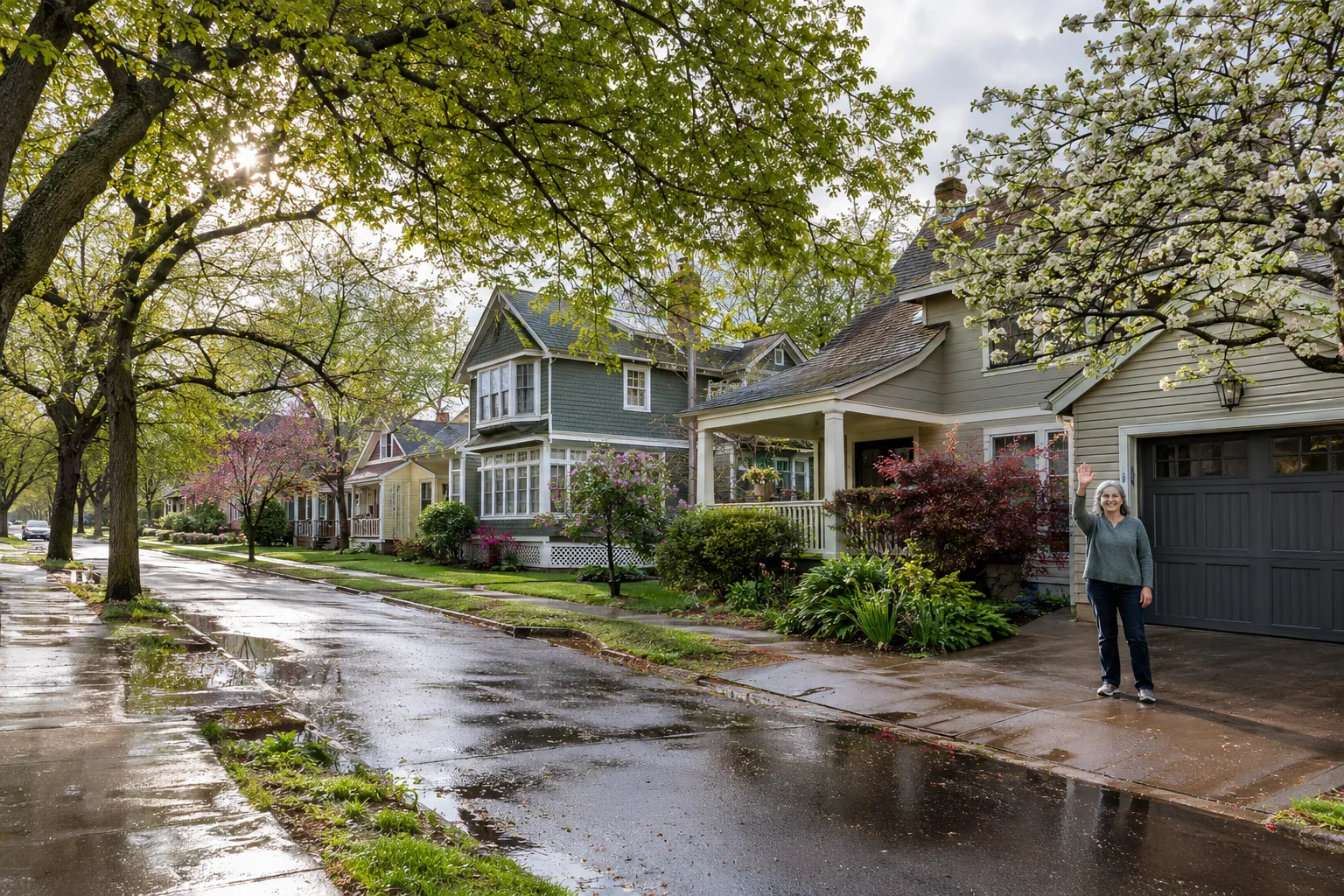
A garage door is often the largest moving part of a house. It lifts a lot of weight many times a week. Problems rarely appear overnight. They start small, and small problems cost less than a door that has stopped working. This guide covers what to look for in a typical the Port Huron area home, from an older frame house to a ranch with a newer opener.
Start with what you hear
Listen the next time the door runs. A healthy door makes a steady hum and a soft rolling sound. Pay attention to:
- A loud bang from the garage, often a spring letting go
- Grinding or scraping along the tracks
- Squealing from dry rollers or hinges
- An opener that hums but does not move the door
A single loud bang followed by a door that will not lift is a common sign of a broken torsion spring. Do not try to force the door open.
Watch how the door moves
Watch the full travel from closed to open. Does it rise evenly on both sides? A door that tilts, jerks or stops partway may have a worn cable, a bent track or a spring that has lost tension. Does it close slower or faster than it used to? Either change is worth noting.
A door that feels very heavy when released from the opener often points to the springs, not the opener. Be careful with this check. Keep fingers away from hinges and never touch springs, cables or the brackets that hold them. They are under high tension. If the door feels wrong, stop and leave it alone.
Look at the hardware
With the door closed and the opener switched off, scan the hardware from a safe distance:
- A visible gap in a torsion spring coil, which means a break
- Frayed or unraveling cable strands near the bottom brackets
- Rust on springs, hinges or track screws
- Tracks that look bent, loose or out of line
- Rollers that are cracked or worn flat
- A bottom seal that is cracked, flattened or missing
Sensors matter too. If the door reverses on its own or refuses to close, the eye sensors near the floor may be knocked out of line or dirty.
How the seasons make it worse
Weather shapes when problems show up in the Midwest.
Cold snaps. Deep frost stiffens grease and shrinks metal. Springs and cables work harder, and a spring that was already tired often gives out on the first hard-freeze morning. A bottom seal can freeze to the slab and tear when the door lifts. Frost can also shift a slab slightly, leaving the door a little out of square.
Humid summers. Moisture speeds up rust on springs, cables and hinges. Wood trim can swell and make the door bind.
Storms and hail. Severe thunderstorms bring power surges that can damage an opener's circuit board. Hail and wind-blown debris can dent panels and bend tracks.
Spring flooding. Homes with full basements and sump pumps know how wet a spring can get. Water at the garage threshold corrodes the bottom of the door, the seal and the lower track brackets. Check these after heavy rain.
Call for availability (810) 292-0412
Which signs are urgent
Some signs mean stop using the door until it is looked at:
- A broken spring or snapped cable
- A door hanging crooked in the tracks
- A door that drops fast when released
Other signs can wait for a scheduled visit, such as a squeak, a worn seal or a slightly noisy opener. Waiting still has a cost. A door running on worn parts puts extra strain on everything else, and a small fix can grow into a larger one.
What to do when you spot something
1. Stop using the door if it looks crooked or unbalanced. 2. Write down what you saw and heard, and when it started. 3. Take a photo of any damaged part from a safe distance. 4. Ask providers for written quotes so you can compare them.
Those notes help a provider narrow down the problem before arriving.
Timing matters as well. Early fall is a good moment to check the door before deep frost. Spring is the time to check for water damage. Fixing a worn part before the first cold week is usually easier to schedule than a rushed repair in the middle of a January freeze, when providers tend to be busy.
Call for availability (810) 292-0412
Related guides
Garage Door Warning Signs Every Port Huron Homeowner Should Know: questions
What does a loud bang from the garage mean?
A sudden bang, followed by a door that will not lift or feels very heavy, often means a torsion spring has broken. Springs are under high tension, so do not touch them or force the door. Stop using it and ask a provider for a written quote on replacement.
Why do garage door problems seem to start in winter?
Cold stiffens grease and shrinks metal, so springs, cables and rollers work harder. Seals can also freeze to the slab. A part that was already worn may fail on the first hard-freeze morning, even though the wear built up over many months.
Can I keep using a door that is a little noisy?
Light squeaks from dry rollers or hinges can usually wait for a scheduled visit. A door that grinds, jerks, tilts or reverses without cause should not be used until it is checked. Extra strain on worn parts can turn a small fix into a larger one.
Reach a local provider
Describe your garage door problem and a provider in our network will follow up. Call (810) 292-0412 to check availability, or send an estimate request at your own pace.
No obligationTalk to a local provider
A short call connects you with an independent local provider who can answer questions and set up an estimate visit.
Call for availability (810) 292-0412
No obligation